Most governance handbooks are read twice. Once by the person who wrote it, and once by a new joiner in their first week who is trying to seem diligent. After that it sits in a folder, growing progressively less accurate, until someone rewrites it two years later and the cycle begins again.
This is a shame, because the handbook is the one document that could answer most of the questions an organisation asks itself repeatedly. The reason it does not is almost never the writing. It is the structure, the ownership and the honesty about what it is for.
What a governance handbook is actually for
Not for describing the organisation. For answering the questions people have when they are stuck.
That reframe changes the whole document. A governance handbook written to describe will be organised by topic, comprehensive, and largely unread. A handbook written to answer will be organised by situation, deliberately incomplete, and used.
The questions people are actually stuck on are narrow and repetitive: Am I allowed to decide this? Who do I talk to about this? What happens if I disagree? How does something change around here? What am I committed to? Everything in a good governance handbook exists to answer one of those.
The five sections that earn their place
How we decide
The section most handbooks omit and the one most people need. Not the values around decision-making, but the mechanics: what kinds of decision exist here, which ones a person can make alone, which need consultation, which need consent from those affected, and which are reserved.
This is your decision rights map in narrative form. If your handbook contains nothing else, contain this, because it is the answer to the single most common blocking question in a self-managing organisation.
Roles and what they carry
Not an org chart. A list of the roles that exist, the responsibilities each holds, the authority each carries, and who currently fills it.
Keep the person separate from the role. Roles change hands and the definition should survive the handover, which is exactly what does not happen when a handbook describes what Priya does rather than what the Supplier Relations role holds. The distinction between a task, a responsibility and a role is worth being precise about here, because the handbook is where the imprecision usually enters.
How to change something
The section that determines whether the governance handbook is a living document or a monument.
If there is no clear, low-friction route for a member to propose changing a policy, then every policy in the handbook is effectively permanent, and people will route around the ones they disagree with rather than changing them. Routing around policy is how an organisation ends up with two systems: the documented one and the real one.
State the route plainly: who to raise it with, what form it takes, how long it takes, and what happens to objections.
What happens when things go wrong
Conflict, disagreement, a decision someone thinks was wrong, behaviour that breaches something. Most handbooks cover this in one paragraph of aspiration, and it is the section people need most urgently and read most carefully when they need it.
Be concrete. Who does someone speak to first. What if that person is the problem. What is confidential and what is not. What the actual steps are and roughly how long they take.
What we have committed to
Standing commitments the organisation has made to its members, its customers or its constitution. Pay approach, working patterns, membership rights, anything a co-operative's rules require, anything a B Corp certification depends on.
This section is short and it is what people check when they suspect something has drifted.
What to leave out
Almost everything else, and specifically these.
Values and culture statements. Not because they do not matter but because they do not belong here. A handbook is consulted when someone is stuck on a mechanism, and mixing aspiration with instruction dilutes both. Put the values somewhere people encounter them; keep the handbook operational.
Anything covered better elsewhere. If the expenses process lives in the finance system, link to it. A governance handbook that duplicates other sources acquires a maintenance burden it cannot sustain and will be wrong within a quarter.
History. How the organisation came to work this way is genuinely interesting and belongs in the decision records that produced each policy, where a curious reader can find it, rather than in the document someone is reading because they are blocked.
Anything nobody will own. The strongest filter available. If no person or role will put their name to a section as being accountable for its accuracy, that section should not exist.
The structural rule. Every section carries an owner and a date it was last confirmed accurate. Not last edited, confirmed. An unowned, unconfirmed section is folklore, and readers treat it accordingly. This one convention does more for governance handbook credibility than any amount of rewriting.
Structure for scanning, not reading
Nobody reads a governance handbook front to back except in week one, and the week-one reader is not the audience you should optimise for. Optimise for the person who arrives mid-document, mid-week, with a specific question.
That means short sections with descriptive headings phrased as the question they answer. It means each section standing alone rather than depending on the one before. It means the answer at the top and the nuance below, so that a reader who stops after two sentences has still got something correct.
Instead of | Write |
|---|---|
"Decision-making framework" | "Can I decide this on my own?" |
"Role architecture" | "Who holds which role, and what can they decide?" |
"Change management process" | "How do I propose changing a policy?" |
"Conflict resolution" | "What do I do if I disagree with a decision?" |
Keeping it alive
Three practices, all light. If you would rather not start from a blank page, our governance handbook template sets out the five sections with prompts written in.
When a decision changes something the handbook describes, the handbook is updated as part of that decision rather than afterwards. This is the only maintenance mechanism that reliably survives, because it attaches to something that is already happening.
When someone asks a question the handbook should have answered, the answer is added rather than only given. Most handbooks grow correctly if this single habit holds, and the questions people ask are far better guidance than any planning exercise.
And the whole thing is reviewed when the organisation changes shape, not on a calendar. Annual reviews produce a burst of activity and eleven months of drift; structural changes are when the handbook actually goes wrong.
The infrastructure point
A governance handbook kept in a document is a snapshot of things that live elsewhere. Roles live in the role structure. Decision rights live with the roles. Policies were produced by decisions. The governance handbook copies all of it, and copies drift.
The version that stays accurate is one where the handbook is a view rather than a copy: it shows the current roles because it reads the role structure, shows current policies because it reads the repository, and links each policy to the decision that established it, so that when the decision changes the handbook changes with it.
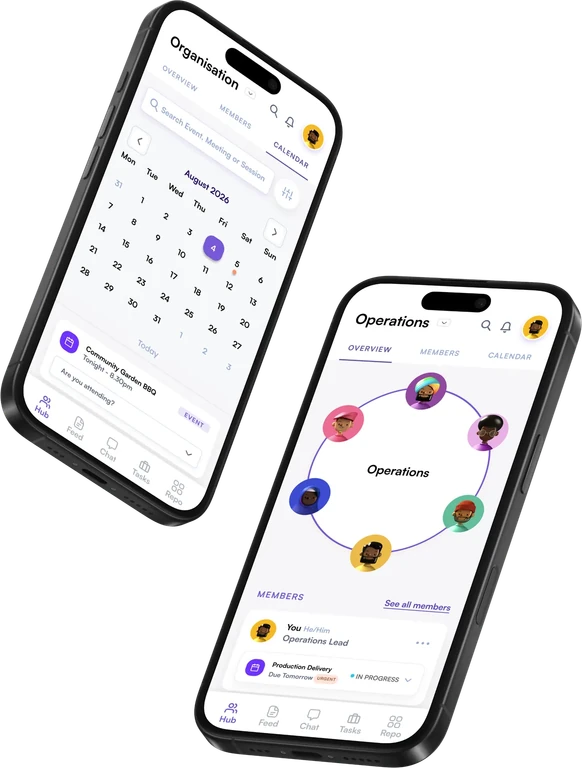
That is how Autono's Repo is put together, and it is why organisations using it stop having the two-yearly rewrite. There is nothing to rewrite, because nothing was ever a copy. The handbook sits alongside the policies, processes and contracts it refers to, and enterprise search reaches all of it.
If your handbook is comprehensive and unread, structure is probably the fix rather than effort. Get started with Autono, or request a demo if you would rather be shown what a handbook looks like when it maintains itself.
Related: why doesn't anyone use our documentation on the trust problem underneath this, and self-serve employee onboarding on the reader who needs the handbook most.