


You gave your team autonomy. Now nobody knows who decides
Autono makes decision rights explicit and every decision traceable, so people can act without asking permission and you can see what happened without asking for an update.

Start with one team. No rollout required.
 Set it up in an afternoon
- Works with Slack, Teams and Jira
- No framework required
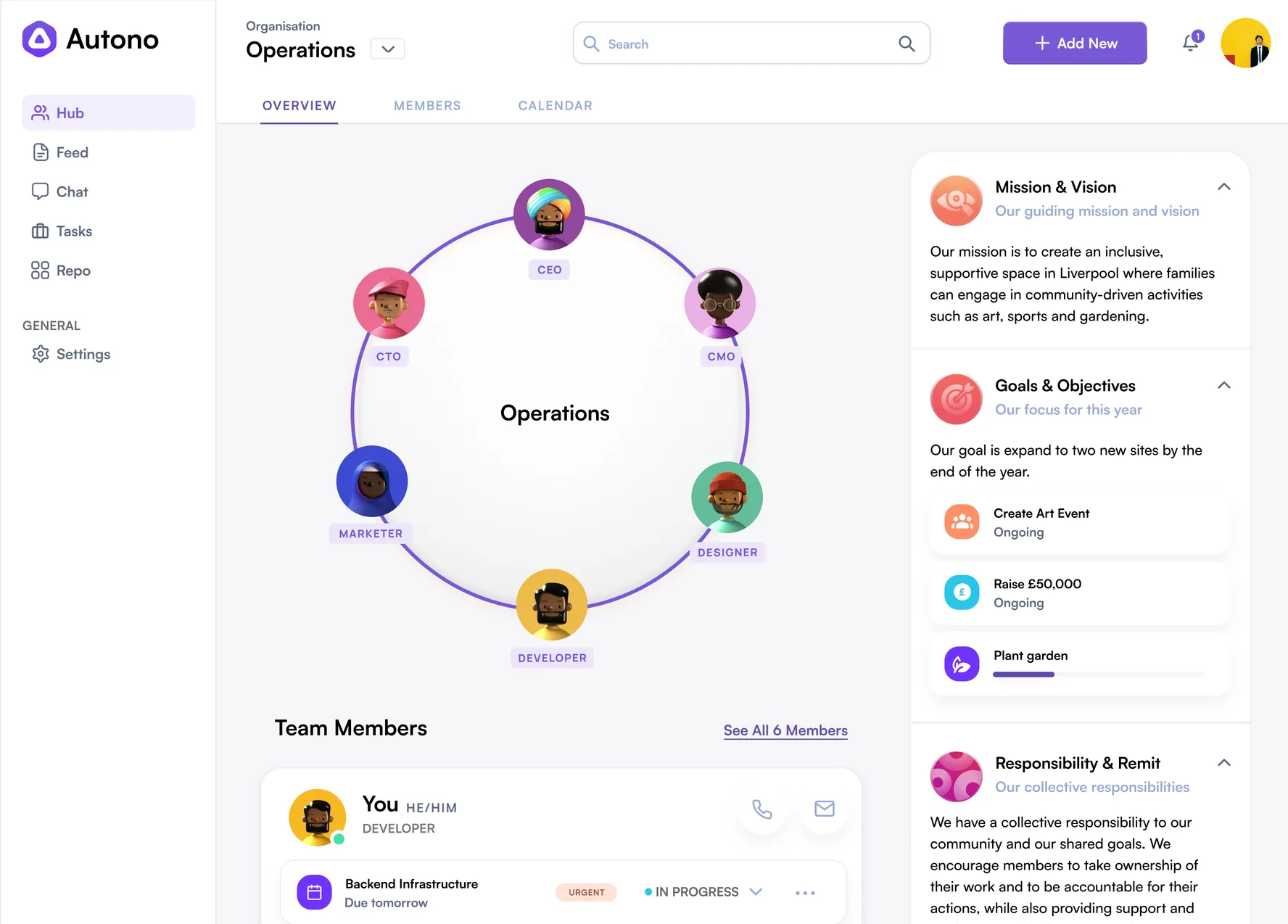



Flat is not the same as clear
You removed the hierarchy and replaced it with a question nobody can answer: whose call is this?
So decisions drift back to you. Not because you want them, but because yours is the only authority anybody is certain about. Your calendar fills with approvals you did not want to give. Work stalls in the gap between two teams who each assumed the other owned it. And the harder you push people to take ownership, the more they check first.
Authority you can point at
Every role carries explicit responsibilities and explicit decision rights. Anyone can look up who owns a call before they make it, or before they escalate it to you. Decisions get made where the work is, and every one leaves a record showing what was decided, by whom and why.
“Autonomy stops meaning ambiguity. Accountability stops meaning surveillance.”
Boosting Autonomy & Accountability
in 3 easy steps with Autono
Map authority
Roles, responsibilities & decision rights visible.
Fifteen minutes per team, and the “who owns this” question is answered permanently.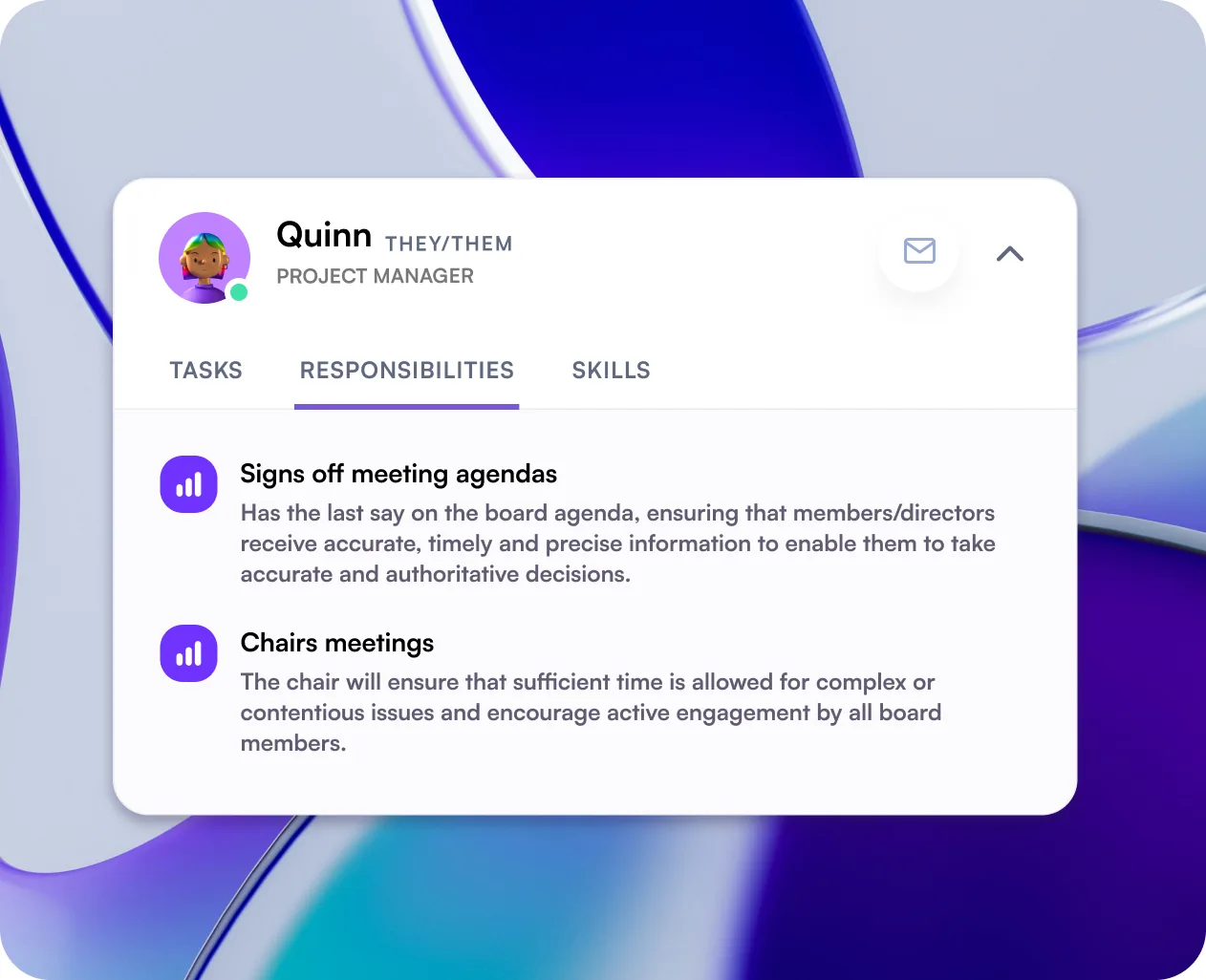
Decide in the open
Sessions run decisions asynchronously.
This allows decisions to be made and people to act autonomously within their remit without booking your time.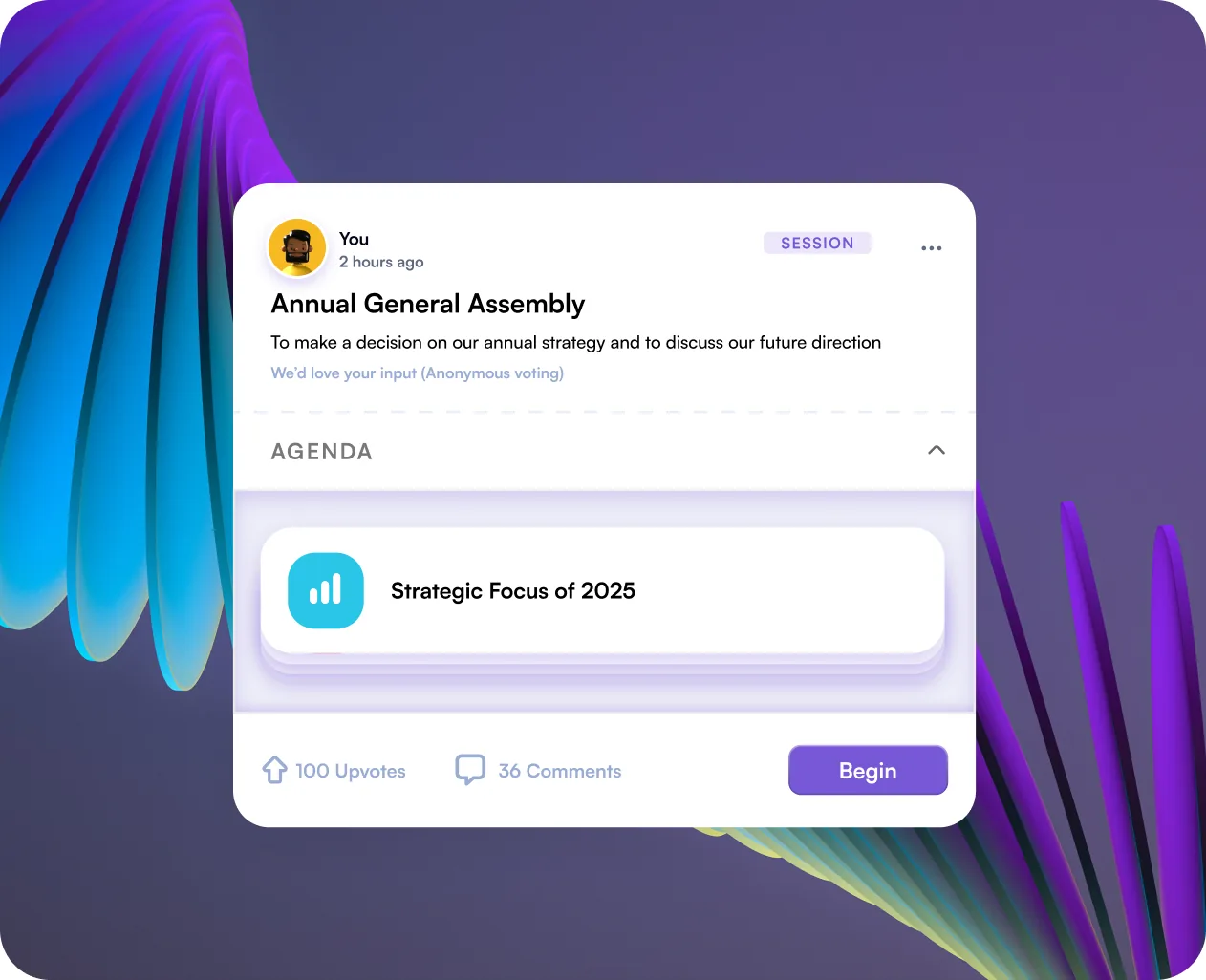
Keep the trail
The decision is logged with context & actions.
The Decisions log records the call, the reasoning and the follow-through. Oversight without a single status meeting.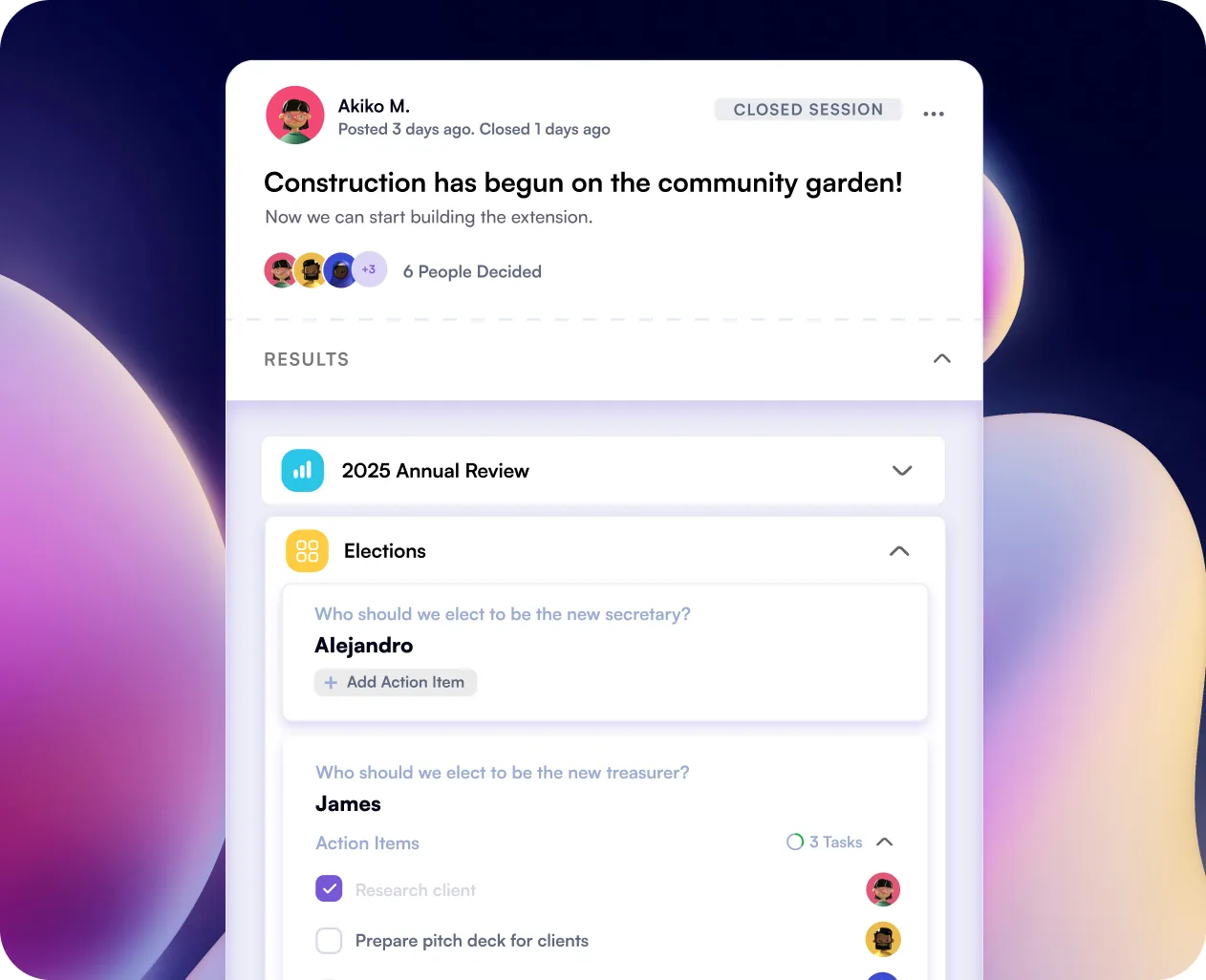
Your calendar, and your confidence

You stop being the bottleneck
Approvals that only reached you because of ambiguity stop reaching you at all, and the structure holds at 50 people, at 200 and at 500, because it lives in the system rather than in the founders’ heads.

Delegation becomes documented, not hoped for
Handing over a decision right is a change in the system, not a conversation someone might remember differently.

Oversight without re-centralising
You see more than you did under a hierarchy, because decisions that used to happen in unrecorded conversations now leave a trail.

Employee engagement sits at around one in five, with trillions in lost productivity behind it. Disengagement is rarely a motivation problem. It is usually people who are not sure what they are allowed to do.
Three things you might be thinking

“This sounds like bureaucracy for a team that hates bureaucracy.”
It replaces bureaucracy. The recurring approval meeting exists because authority is unclear. Make it clear and the meeting has no reason to exist.
“We already use Notion, Slack and Jira.”
They show what people are doing. None of them show what was decided, who had the right to decide it, or why. That is the gap this fills, and Autono integrates with all three.
“Do we have to adopt Holacracy or sociocracy?”
No. Bring your own model, or none. Autono supplies the structure, not the ideology.

Map one team this week
Start with the team where “who decides this?” comes up most. Map the roles, run the next contested decision as a Session, and see how much of it needed you.
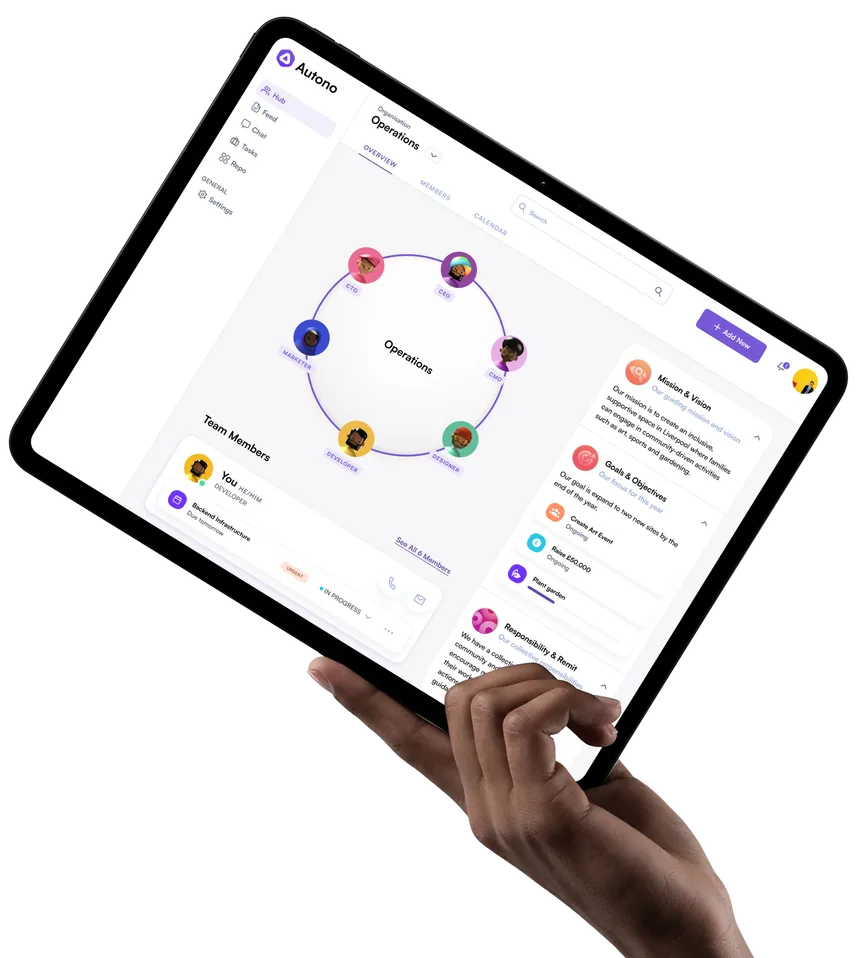
A single team can map roles and run its first decision inside an afternoon. There is no organisation-wide rollout required to get value.